Editor: J H McIntosh
“Blurring the Boundaries: The First Plant-Animal Hybrid Cells”, is an article that highlights a groundbreaking study by researchers from the University of Tokyo and the RIKEN Center for Sustainable Resource Science. For your convenience, we asked NotebookLM to generate a podcast that recaps the entire article.
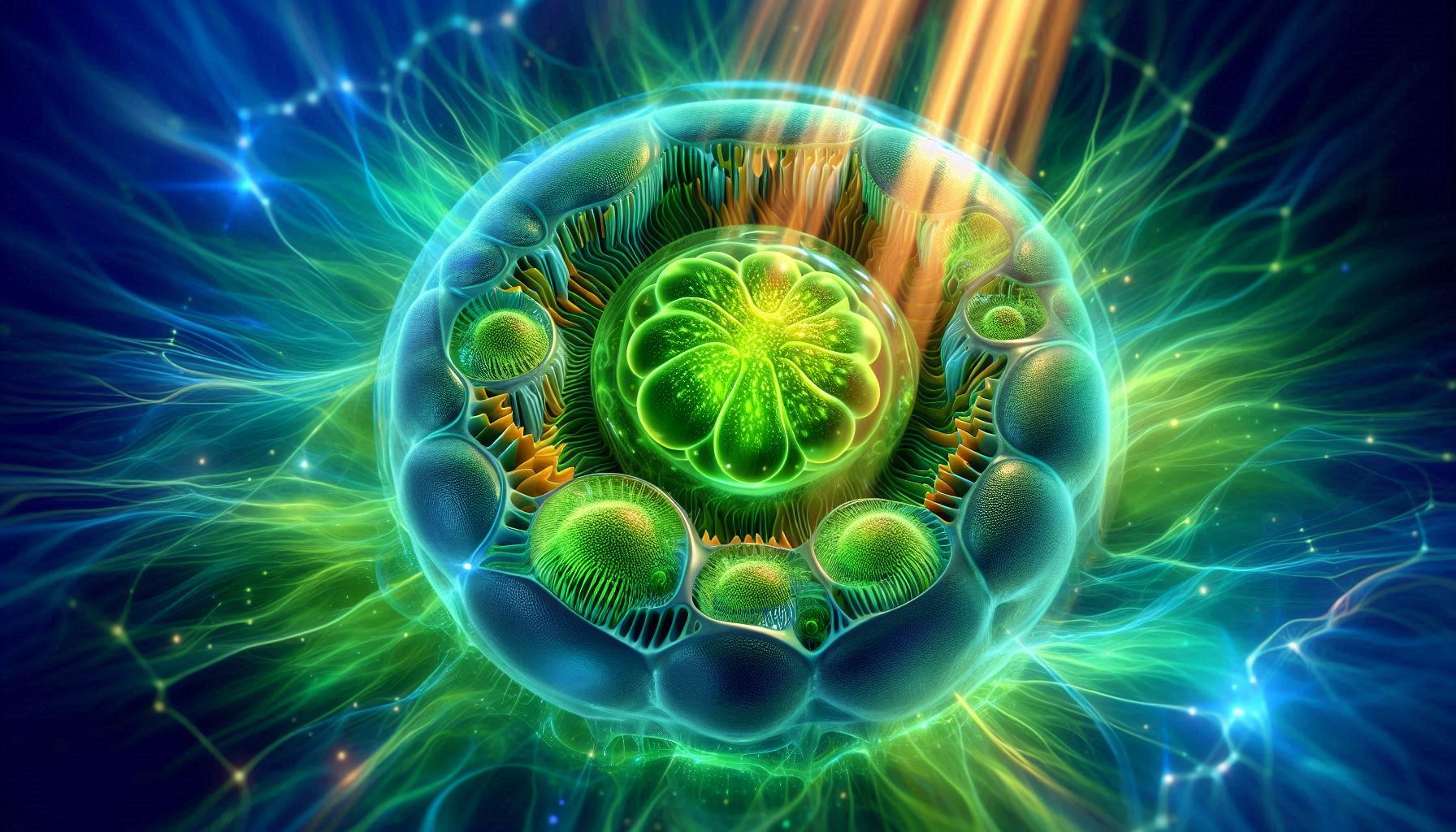
Our reading of the study indicates it marks a major milestone in synthetic biology: successfully integrating a chloroplast into an animal cell, specifically an ovarian cell, which briefly utilized the chloroplast’s energy production. This achievement blurs the line between plant and animal cells and opens the door to revolutionary applications, such as improving organ efficiency, enhancing oxygen production, and reducing the human carbon footprint.
The journey to this breakthrough dates back to the 1970s, when scientists first began exploring the possibility of photosynthetic animal cells. Early efforts, though unsuccessful, contributed significantly to advancements in genetic engineering, chromosome studies, cancer research, and antibody production. The field persevered, refining genome sequencing and genetic modification techniques over decades.
The successful chloroplast implantation overcame a major challenge: animal cells naturally destroy foreign bodies to protect themselves. This experiment represents a monumental step forward, leveraging decades of research to achieve what was once thought to be science fiction.
For details listen to our podcast above and to read the article see the link below.
Blurring the Boundaries: The First Plant-Animal Hybrid Cells
Author’s Name: Olivia Louise Dobbs
Publication Date: November 2024
Source Information:
A study published by researchers from the University of Tokyo and the RIKEN Center for Sustainable Resource Science.
Journal Information:
Published in J-Stage, managed by the Japan Science and Technology Agency.
Citation for the Study:
The specific study can be accessed here.
https://www.jstage.jst.go.jp/article/pjab/100/9/100_pjab.100.035/_html/-char/en